
 Alfred Harper

Why the Right Nozzle Tip Matters
I know that choosing the correct pressure washer nozzle tip transforms how quickly and safely a job gets done. The right tip balances cleaning power and surface protection, preventing damage while cutting stubborn grime. In this article I explain how nozzle spray angles, materials and fittings affect performance, and why a small change in tip can save time and avoid costly mistakes.
You will learn to match nozzles to common tasks, compare tip types and durability, check compatibility with quick‑connect systems, and follow safe maintenance and troubleshooting tips. I also cover safety standards too. My goal is to give practical, easy‑to‑apply guidance so you get the best results from your pressure washer every time.


How Pressure Washer Nozzle Tips Work
The mechanics in plain terms
A nozzle tip is not just a shaped hole — it’s a flow regulator and pattern former. Orifice size, spray angle and internal geometry convert the water the pump delivers (pressure and flow) into either a narrow, high‑impact jet or a wide, low‑impact fan. Smaller orifices and narrow spray angles concentrate the same water volume into a smaller area, increasing impact force; wider angles spread that energy over more surface, lowering the per‑square‑centimetre cleaning power.
Key terms you need to know
Geometry and real‑world effects
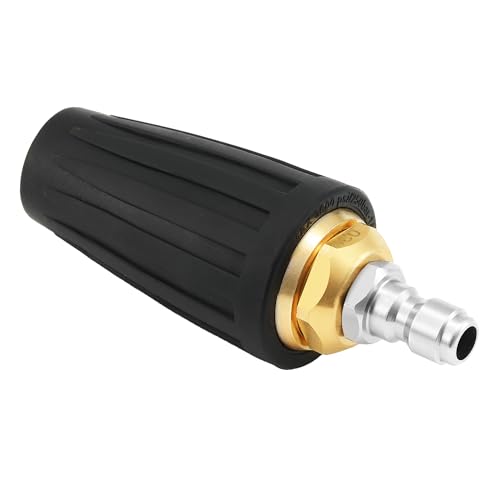
Nozzle geometry (internal vanes, orifice lip) shapes turbulence and how the jet breaks into droplets. A 0° steel tip can cut through stubborn concrete grime but will etch paint or wood if used too close. Conversely, a 40° or 65° nozzle rinses siding gently but may never remove oil stains. A turbo (rotating) nozzle temporarily concentrates energy while sweeping in a circular pattern — excellent for fast removal of thick grime on patios.
How to match nozzles to your washer
- Read your washer’s PSI and GPM (e.g. Sun Joe SPX3000 ~2,030 PSI/1.76 GPM).
- Choose a tip whose design can pass at least the rated GPM; undersized orifices can overwork the pump.
- Start with a wider angle at a distance, then step to narrower tips for stubborn spots — never the reverse.
In the next section I’ll show practical pairings for common jobs so you can choose the right tip quickly and safely.
Selecting the Right Nozzle for Common Jobs
My quick assessment method
When I approach a job I run a three‑step check: surface type (hard, medium, delicate), soil level (light, medium, heavy) and safe working distance. That combination tells me whether to start wide or narrow, and whether to use a turbo or a soap nozzle first. For example, a heavily oil‑stained garage slab (hard + heavy) calls for a different tactic than a painted fence with light mildew (delicate + light).
High‑impact tasks: concrete and stubborn stains
Medium‑duty cleaning: patios, driveways, garden furniture
Delicate surfaces: painted surfaces, vehicles, wood decking
Simple decision rules I use
Next, I’ll cover nozzle materials and how build quality affects longevity and performance.
Nozzle Tip Types and Spray Angles Explained
Spray-angle basics
Spray angle determines how the machine’s force is distributed: narrow angles concentrate water into a small spot (high impact pressure), wide angles spread that same force over a larger area (greater coverage, lower impact). I always think in terms of trade‑offs — speed versus concentrated cleaning power — and choose accordingly.
Narrow, medium and wide-angle tips
A practical tip: start wide and move closer or narrow the angle only when necessary. Match the tip orifice to your GPM — undersized orifices reduce flow and effectiveness.
Low-pressure soap and chemical nozzles
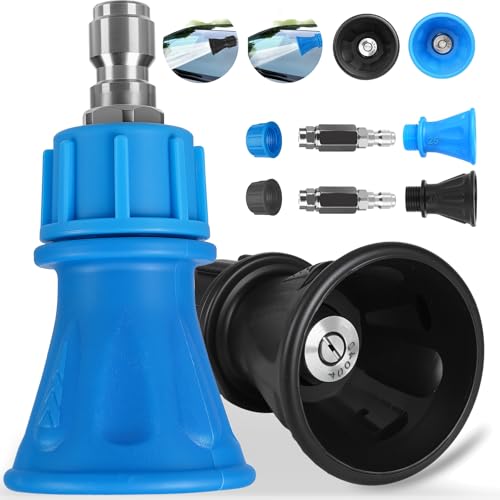
Soap nozzles (often black) reduce pressure to draw detergent through the wand. I apply soap with low pressure, let dwell, then switch to a fan or turbo for rinsing. Never use a soap nozzle on surfaces that require high impact.
Turbo/rotary and variable-pattern nozzles
Turbo (rotary) nozzles spin a narrow jet into a rotating cone — you get the cleaning power of a 0° with faster coverage. I use MiTornado-style turbo tips for stubborn stains on concrete; they’re vastly quicker than a fixed 0° but still risky on soft materials. Variable-pattern nozzles let you change the fan angle on the fly — handy for mixed tasks.
Specialty tips: surface cleaners & adjustable nozzles
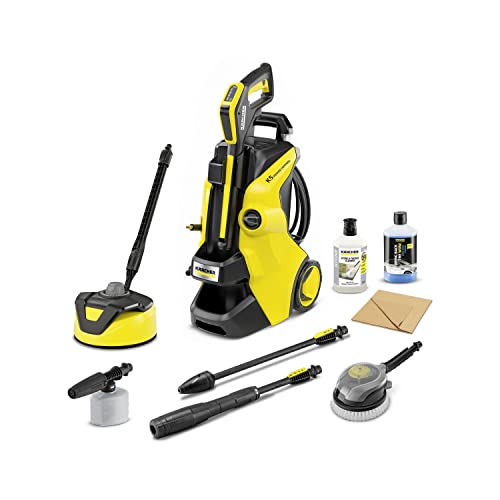
Surface cleaners (e.g. Karcher T‑Racer) use twin rotating jets inside a housing for even, streak-free cleaning of driveways. Adjustable nozzles and foam lances increase versatility. Each specialty tip solves a specific pain point; the choice depends on the surface and desired finish.
Next, I’ll examine how materials and build quality affect nozzle life and performance.
Materials, Build Quality and Durability
Metals and wear resistance
I favour thinking of nozzle construction as a performance hierarchy. Brass is common, easy to machine and resists corrosion reasonably well, so it’s fine for occasional home use. Stainless steel improves corrosion resistance and holds up better on coastal jobs. For heavy commercial work where grit and sand are constant enemies, hardened steel or carbide‑tipped orifices make a noticeable difference — they simply wear far slower. I once ran a brass tip for a year on a renovation site and watched the orifice ovalise; switching to a ceramic insert extended service life by over a year.
Ceramic, coatings and plastics
Ceramic orifice inserts give the best abrasion resistance and maintain spray consistency longer. Coatings (nickel, chrome) help against corrosion but don’t stop abrasive wear. Plastic tips save cost and resist chemical attack, but they soften under heat and wear rapidly with abrasive particulates — not my choice for frequent use.
Seals, O‑rings and tolerances
Seals are the quiet heroes. Nitrile (NBR) O‑rings work for most cold‑water jobs; EPDM handles hot water and some detergents better, while Viton (FKM) tolerates harsh chemicals and higher temperatures. I always check that O‑rings are replaceable and that the nozzle accepts standard spares. Tight manufacturing tolerances — a snug seat and concentric orifice — prevent leaks and stabilise the jet; sloppy machining causes spray wobble and premature wear.
Practical checks and selection tips
A quick pre‑job habit I use: run a visual check for O‑ring cracks, spin the tip to feel for wobble, and replace inexpensive seals before a long day — a small step that prevents spray drift and ruined jobs.
Compatibility, Fittings and Quick-Connect Systems
Common connector types I see on the job
Connectors vary by region and brand; knowing the common ones saves time at the van.
Verifying pressure and flow compatibility — a quick checklist
I always match three numbers before fitting a tip:
If the nozzle’s flow rating is lower than the pump’s flow, the pump will run against excess backpressure — symptoms include pulsation, overheating, or valve damage.
Adapters, mixing brands and practical cautions
I once arrived to find my Kärcher lance wouldn’t mate to a customer’s older AR outlet; an adapter solved it, but not before we checked ratings.
Benefits of modular quick‑connect systems
Quick‑connects transform productivity: swapping tips in seconds, adding turbo or surface‑cleaner attachments, and using extension wands. For mobile work I favour a modular kit (machine‑matched couplers, spare O‑rings, and rated adapters) — it keeps me on schedule and protects the pump.
Safe Use, Maintenance and Troubleshooting
Safety basics I follow every job
I treat every nozzle as a potential hazard. Key rules I never break:
A quick anecdote: after a ricochet sent grit into my colleague’s goggles, I began double‑checking the surface for loose stones before blasting.
Routine maintenance I perform
I clean and inspect tips after every job:
Troubleshooting common issues
Symptoms and fixes I apply quickly:
Prolonging life and knowing when to replace
Use an inline filter, avoid sandy water, and rotate tips to equalise wear. Replace rather than repair when the orifice shows visible erosion, mushrooming, or when performance doesn’t recover after cleaning. With these practices in place, I move on to choosing and caring for nozzle tips with confidence.
Choosing and Caring for Nozzle Tips with Confidence
I summarise: match nozzle type and angle to the task, prioritise build quality and compatibility, and maintain tips to ensure safe, efficient performance. By selecting the correct spray angle and durable materials, and confirming fittings, you protect surfaces and equipment while improving cleaning results. Regular inspection, cleaning and correct storage prevent blockages and premature wear.
Apply these guidelines when buying and caring for tips to make informed choices and prolong tool life. I encourage you to test settings on inconspicuous areas and replace worn tips promptly for reliable, safe operation every time.





Procrastinated replacing my old tips and ended up stripping a fitting trying to force a stuck nozzle off. Don’t be me. ????
Also: the nozzle guard two-pack with 25° and 40° is a good starter if you’re indecisive.
If it’s brass you can sometimes thread off the connector with a strap wrench. Saved my sanity once.
Oof, been there. Heat + penetrating oil can help a stuck metal fitting, but try not to force it. Good tip about the two-pack — it’s a nice starter set.
Really liked the ‘Choosing and Caring for Nozzle Tips with Confidence’ section. There’s enough step-by-step advice that even a newbie can avoid common pitfalls.
A few thoughts:
– Wear gloves when cleaning turbo nozzles, they can be sharp.
– Store tips dry — I lost a set to rust after leaving them in a damp bin.
– If you’re unsure about a nozzle’s angle, tape a paper target and test from a distance before full use.
Thanks for including product examples — helped me pick between the Nozzle Guard Set and the Two-Pack Nozzle Guard with 25° and 40° Tips.
The paper target idea is getting printed and laminated for my next job. Genius.
Gloves + goggles + no hero moves. Learned that the hard way.
Thanks for the practical storage tip, Rachel — storing dry is key. The paper target trick is also brilliant for testing angle without making a mess.
Great article — cleared up a lot for me. I had no idea spray angle mattered this much. I bought a Quick-Connect Turbo Nozzle for 2500 PSI washers last month and it’s been great for the driveway, but the piece about compatibility and fittings saved me from buying the wrong adapter.
Quick question: anyone else worry about wearing out the quick-connect O-rings? Feels like a weak point over time.
I keep a tiny zip bag with 2 spare O-rings and a dab of grease in the tool box. Saved me once when I was mid-clean and it started leaking.
Yep, my O-ring split after a season of heavy use. Learned the hard way. Silicone grease + spare set fixed it though.
Thanks, Sarah — glad it helped! O-rings do wear; the article’s maintenance section suggests keeping a small tube of silicone grease and spares for your quick-connects. Replacing O-rings is cheap and easy.
Compatiblity questions: the article talks about quick-connect systems but doesn’t show pictures of the different fittings. I’m new to this — can someone confirm if my Home Depot 1/4 inch QC will work with a ‘Seven-Colour 1/4 Inch Quick-Connect Nozzle Kit’ from Amazon? Or do sizes vary even if they claim 1/4″?
I had two ‘1/4″‘ kits that felt different. One clicked solid, one was loose until I swapped O-rings. Long story: keep spares.
Measure the inner diameter and check reviews — someone usually mentions fit issues.
If both claim 1/4″ QC they should be compatible, but tolerances and O-ring types can vary. If they’re inexpensive imports, occasionally fit isn’t perfect. If possible, buy from a seller with a good return policy.
Loved the safety and maintenance tips. The ‘start with widest angle’ rule is underrated — saved me from blasting a deck board off last spring. Also the troubleshooting checklist helped when my spray was weak (ended up being a clogged tip).
Pro tip: soak stubborn tips in vinegar overnight for mineral buildup.
Great tip, Emily — vinegar is a good, cheap descale. We also recommend flushing with clean water after each job to reduce buildup.
I’ve used an ultrasonic cleaner for years for small nozzle bits; for folks with lots of tools it’s a game-changer. Not cheap, but keeps parts like new.
Okay so I read the nozzle angles explained section like three times ????
– Tried the Two-Pack Nozzle Guard with 25° and 40° tips on the patio — 25° is a beast, took off paint I didn’t know I had.
– 40° was perfect for siding.
– That bit about turbo nozzles (stainless steel 360° turbo nozzle 4.0 GPM) being better for stubborn grime is spot on.
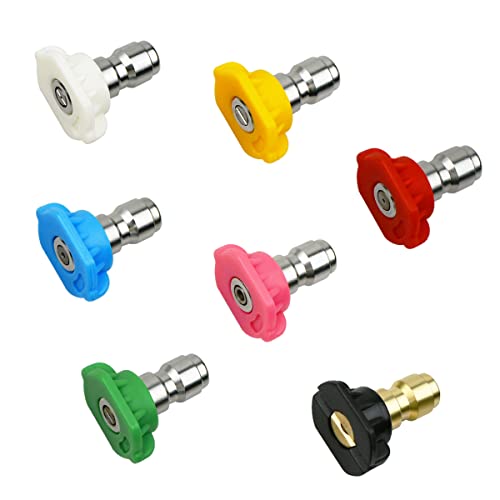
Side note: the colorful Seven-Colour 1/4 Inch Quick-Connect Nozzle Kit looks fun but is that just for organization or any performance reason?
Haha, the 25° can be intense — always worth testing on a hidden patch first. The Seven-Colour kit is mostly for quick ID (so you grab the right angle fast), not performance — same specs, different colors.
Colors = speed. My wife labels them by color so I stop grabbing the ‘death ray’ 0° tip. 10/10 organization hack.
Also, some kits bundle cheap plastic tips that wear faster. If you’re using turbo or stainless ones, the colored kit is mainly convenience.
Agree with admin. The color coding is super handy if you switch tips a lot.
I’m confused about which nozzle I should use for cleaning my vinyl siding. Should I go for a wider angle or a more concentrated one? My pressure washer is around 2000 PSI.
Good rundown on materials and durability. I own the Stainless Steel 360° Turbo Nozzle 4.0 GPM and it’s held up through two summers of heavy use. The article’s note on corrosion resistance is real — worth paying a bit more for stainless.
One small nit: would be nice to see a comparison chart for brass vs stainless vs ceramic nozzles (durability vs price).
Brass is fine for light use, but for frequent heavy use stainless or ceramic-backed nozzles last way longer. Saved $$$ in the long run switching.
Thanks — that’s a great suggestion, Priya. A chart would make the tradeoffs clearer; I’ll put that into the next update.
How careful do I need to be about matching GPM/PSI? I have a 2500 PSI washer and saw the Quick-Connect Turbo Nozzle for 2500 PSI washers listed. Could I also use the Stainless Steel 360° Turbo Nozzle 4.0 GPM on the same machine, or is that pushing it?
Also, anybody explain how GPM affects cleaning power in plain English? The article gets a bit technical for my coffee-first brain.
Ah ok that helps, thanks admin. So I should check my washer’s GPM rating before buying a high-GPM nozzle.
Yep. If your pump can’t keep up, the nozzle can cavitate or the engine strugggles — not ideal.
Short answer: match specs. The turbo nozzle listed for 2500 PSI is designed to work safely at that pressure. A 4.0 GPM nozzle needs your pump to support that flow; if your washer’s pump only does 2.5 GPM you’ll get reduced performance or stress the unit.
GPM = volume of water (how much), PSI = pressure (how hard). More GPM plus adequate PSI = faster cleaning.
If in doubt, buy a nozzle that matches or is slightly below your machine’s max GPM.
Also remember hoses and fittings need to handle higher flow. A cheap flimsy hose can be the weak link.
Troubleshooting question: my pressure seems fine but the spray pattern is uneven — sometimes it’s spotty and other times it’s a nice fan. I cleaned the tip, checked fittings, and swapped nozzles but no luck. Any ideas? Could the turbo nozzle cause intermittent spray issues?
I had a turbo that went funky — inside was a small pebble lodged. Took it apart and cleaned it; works fine now.
Spotty spray can be caused by partial clogs, damaged nozzle or worn internal vanes in a turbo nozzle. Try running water through the nozzle backwards (blow-through from the outlet) and inspect the orifice with a magnifier. If it’s a turbo, internal bearings or vanes can fail and cause uneven spin.
Short and sweet: I bought the Nozzle Guard Set with Five Quick-Connect Tips and it’s been brilliant. Protects tips from drops and keeps things tidy. Also the guard saved a tip when my kid kicked it ????????
Glad it worked out, Olivia — guards are underrated for keeping tips alive longer.
Same here. Guards take the brunt of the impact. Worth it if you tend to be clumsy (me).
I appreciated the deep dive into materials. A few points from my experience:
– Stainless feels expensive but resists pitting and stands up to salty runoff.
– Brass tips are economical but deform faster when used against rough surfaces.
– The article’s maintenance schedule (inspect, clean, lube quick-connects every 20 hours) is realistic — follow it and you’ll avoid most headaches.
Also: turbo nozzles kick up a LOT more grit — wear eye protection and consider a face shield if you’re doing concrete work frequently.
Totally agree on the inspection interval. I keep a small log on my phone so I don’t forget maintenance after big jobs.
Excellent practical notes, Daniel. The face shield suggestion is a good call for frequent turbo use.
Good caution — never thought about the grit issue with turbo nozzles. Will add PPE to my shopping list.
Concrete chips will ruin stainless over time too if you blast too close. Distance matters.
Anyone else get torn between buying the Nozzle Guard Set with Five Quick-Connect Tips vs the Seven-Colour kit? I want both organization and protection, but my garage shelf is limited ????.
Also, quick-connect compatibility: my old washer had a slightly different fitting and I spent an hour cursing before realizing I needed an adapter. Why aren’t fittings standardized?
I feel your pain — there are a few different standards (1/4″ QC, M22, etc.). The compatibility section tries to cover the common ones and suggests carrying a small adapter kit if you own multiple washers.
If space is tight, get the guard set with the five tips — it protects and keeps the tips together. Then buy single colored tips for the ones you use most.
You can get a tiny multi-adapter set cheap on Amazon. Fixed my ‘why doesn’t this click’ problem fast.