
 Alfred Harper
I’ll show you whether an electric washer’s whisper-quiet efficiency really beats a petrol powerhouse on speed, running costs and sheer grunt — are you ready to pick a winner?
Electric vs Petrol Pressure Washer
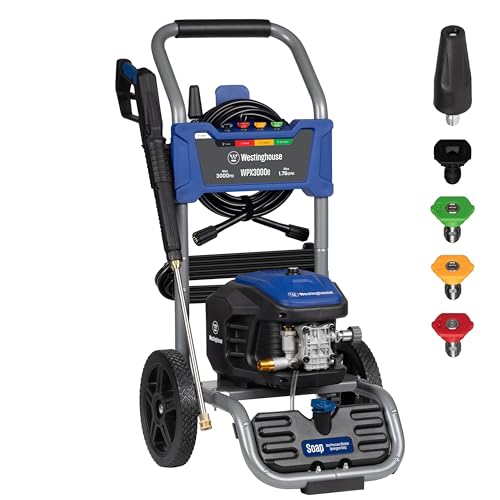
Facing a grimy driveway or mossy patio, I compare the ELECTRIC Westinghouse WPX3000e with the PETROL WASPPER (Honda GX200), weighing performance, usability, running costs, maintenance, service life and suitability, so you can choose the right pressure washer for your needs.
Home Cleaning

I appreciate the impressive peak pressure and user-friendly features like the onboard detergent tank and multiple nozzles. It suits home and light-duty exterior cleaning very well, though the modest flow rate and occasional connection hassles limit its usefulness for very heavy jobs.
Heavy Duty

I find this petrol unit delivers the power and flow needed for demanding, large-area cleaning and commercial jobs. It trades off quietness and compact portability for raw performance, and operators should allow for higher maintenance and noise.
Westinghouse WPX3000e Electric
WASPPER W3200HA Petrol
Westinghouse WPX3000e Electric
WASPPER W3200HA Petrol
WASPPER W3200HA Petrol
Specifications and real-world performance: power, flow and build
Headline specs — raw numbers
I start with the numbers you’ll actually feel on the nozzle.


Motor, engine and pump characteristics
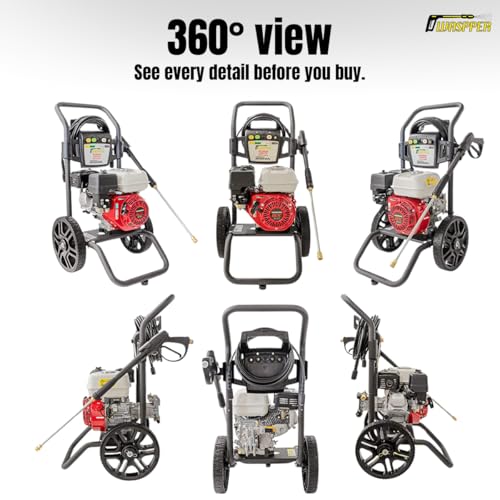
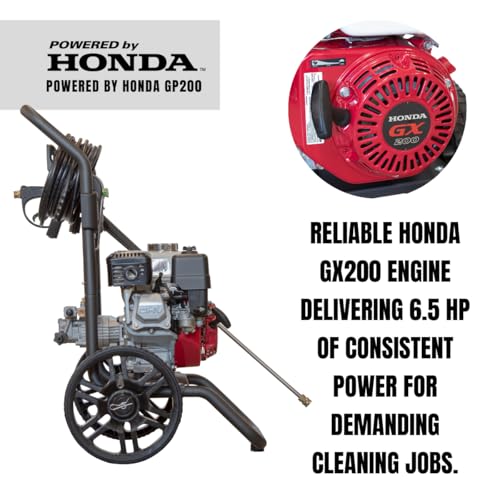
The Westinghouse uses an induction electric motor paired with an axial cam pump — low maintenance, quieter and electrically safer (GFCI cord) but limited by lower flow. The WASPPER runs a proven Honda GX200 petrol engine: higher continuous power and torque, designed to drive a higher‑capacity pump for longer, tougher sessions.
Accessories and build quality
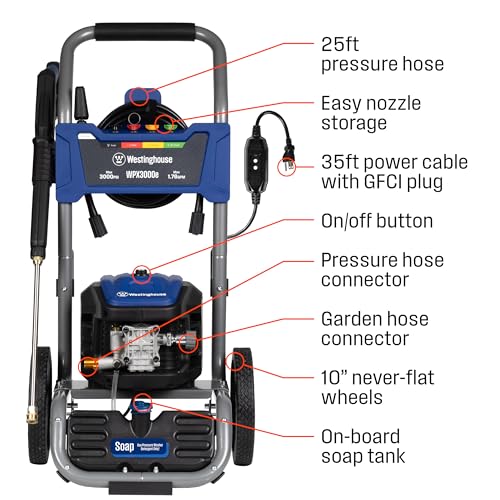
Westinghouse prioritises convenience: onboard soap tank, multiple quick‑change nozzles and never‑flat wheels for manoeuvrability. WASPPER emphasises durability — a heavier chassis, thicker hose routing and engine cooling suited to commercial‑style workloads.
Translating specs into cleaning performance
These differences mean the Westinghouse is better for regular domestic jobs and gentler work; the WASPPER is aimed at heavy, frequent outdoor cleaning where high flow and engine power matter.
Feature Comparison Chart
Usability, portability and noise: setup and daily handling
I assess setup time, starting method, weight and manoeuvrability, hose and cord length, onboard storage and included nozzles. I also compare noise and vibration levels and consider which unit is easier to store, transport or use in residential settings versus remote or large‑scale jobs.
Setup and starting
The Westinghouse electric is plug‑and‑play: attach the hose, connect to the GFCI‑protected mains cord and you’re ready. There’s no fuel, choke or oil to check, so first‑time use is fast and low‑risk.

The WASPPER petrol requires fuel, oil and a pull start. Expect a few extra minutes for checks and warm‑up before cleaning — standard for petrol units but not as convenient for quick jobs.
Weight, manoeuvrability and storage
The WPX3000e is lightweight for its output (≈16.7 kg) with never‑flat wheels and a compact upright frame that fits in a garage or shed and can be lifted onto a car rack by one person.
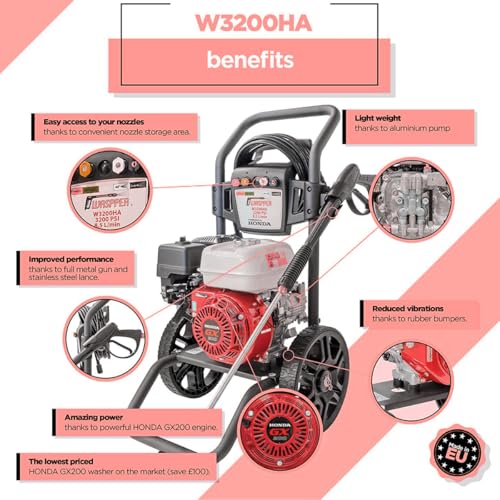
The WASPPER is much bulkier and tougherly built to accommodate the Honda GX200 engine. It rolls on a heavy frame but is noticeably heavier to lift or load; two people are preferable for transport.
Hose, cord and onboard storage
Noise and vibration
The electric unit runs quietly with low vibration, suitable for residential areas and neighbours. The petrol WASPPER is loud and vibratory during operation — effective for heavy work but intrusive in built‑up areas and requiring hearing protection.
Operating costs, servicing and expected longevity
Ongoing running costs (electricity vs fuel)
I compare typical energy use assuming light to moderate homeowner use (≈10 hours/year). The Westinghouse WPX3000e draws roughly 1.5–1.8 kW in use (induction motor); at £0.34/kWh that is about £5–£6 per 10 hours of cleaning. The WASPPER with a Honda GX200 is far thirstier: a working consumption of roughly 2.0–3.0 litres/hour (depending on load) at £1.60/litre produces ~£32–£48 for the same 10 hours. For occasional home use the electric is clearly cheaper to run.


Routine maintenance needs
I expect the WPX3000e to need minimal routine care: check hoses and connections, winterise, and replace O‑rings or lance parts as needed. Its axial cam pump is described as low‑maintenance. The WASPPER requires regular engine servicing: oil changes (every 25–50 hours), spark plug and air filter changes, carburettor attention if fuel is left in the system, and pump seal checks — all of which add time and parts cost.
Spare‑part availability and common failure points
Estimated annual costs and which is more economical
I estimate annual consumable and service costs (light homeowner use): Westinghouse ≈ £20–£60 (parts, occasional servicing), WASPPER ≈ £80–£250 (fuel, oil, filters, parts). For occasional residential jobs I find the Westinghouse more economical; for heavy, frequent or commercial use the WASPPER’s robust engine and higher flow can justify higher running and servicing costs.
Safety, environmental impact and task suitability
Emissions and environmental risk
I treat the Westinghouse WPX3000e as a low‑impact option: zero local exhaust emissions and no on‑site fuel to spill. The WASPPER with a Honda GX200 emits CO2, NOx and particulates during use and carries a higher risk of fuel or oil contamination of run‑off. Where detergents or contaminated water could reach drains, I recommend capturing waste or using biodegradable cleaners regardless of machine.
Noise, neighbours and legal considerations
I find electric units significantly quieter and more acceptable in residential areas. Typical experience: induction electric machines are noticeably calmer than petrol engines; petrol units often provoke neighbour complaints and may breach local noise ordinances if used early or late in the day. Check local bylaws on commercial noise and waste water disposal before heavy work.
Fuel, fire and operator safety
I treat petrol machines as higher‑risk items: petrol is flammable, degrades if stored long, and leaks create slip and fire hazards. Petrol engines produce exhaust heat and carbon monoxide — never run them in enclosed spaces. Electric hazards centre on damaged cables and water ingress; the WPX3000e’s GFCI cord reduces shock risk but I still inspect hoses and plugs before use.
Match to tasks (my recommendations)
Final verdict — recommended choice by user profile
I summarise: Westinghouse offers quiet operation, low maintenance and easy storage — ideal for cars, patios and regular domestic use. WASPPER (Honda GX200) delivers superior power, durability and off‑grid operation for heavy‑duty, remote or professional jobs.
My verdict: for most homeowners I recommend the Westinghouse as the best all‑round pick; for tradespeople or those needing raw power and portability, the WASPPER is the clear winner. Ready to buy? Order with confidence today.


I like that the Westinghouse has a 5 nozzle set and the onboard soap tank. Makes detailing my car super easy — one pass with soap, wait a couple minutes, then high-pressure rinse. Car paint has stayed fine so far.
Anyone else use that unit for cars exclusively? Curious about seal safety on older cars.
I’ve used the same model on older cars — just be gentle with the nozzle selection and don’t aim at seals up close.
Olivia — using the low-pressure soap nozzle and keeping a safe distance (1–2 feet) helps protect paint and seals. Avoid the turbo/rotary nozzle on delicate surfaces.
Also worth rinsing off any detergent residue quickly — soap left on paint can cause spotting in sun.
Got the WASPPER for my garage cleaning and it’s insane how fast it removes oil stains. Worth the noise and the extra maintenance tbh ????
Happy it worked well for you, Leah. For oil stains it’s often the best option unless you want to apply chemicals first.
Question for folks: how hard is maintenance on the Westinghouse induction motor vs the Honda petrol engine? I’m not super handy but want something reliable. Also does the electric have any cold-weather limitations?
Thanks!
Good questions, Priya. The induction motor on the Westinghouse is low-maintenance — mostly keep it clean and dry. No oil changes or spark plugs. For cold weather, keep it stored above freezing and drain/avoid freezing hoses. Petrol engines need regular oil changes, air filter checks, and winterizing fuel.
I own an electric and it’s been mostly plug-and-play. Just check seals and store inside winter. If you’re not into engine maintenance, electric is easier.
Not a fan of petrol models in neighborhoods — noise + fumes = neighbors complain. I once had an HOA letter because I ran my petrol washer too early. Electric all the way for suburban life.
Also electric saves the hassle of running out of gas mid-job.
Or use a sound enclosure and keep start times reasonable. But yes, HOA rules are real.
That’s a common tradeoff. If you need petrol-level power without neighbor drama, consider doing heavy jobs during times people expect noise or rent a professional unit for a day.
Help me choose: I need something for a medium-sized patio and occasional car washes. I live in an apartment building with an outlet nearby but not a garage. Budget around mid-range. Which would you recommend?
I want something easy to store and not overly loud (neighbors!).
Given your constraints (outlet nearby, storage, noise concerns), the Westinghouse WPX3000e electric is likely the better fit. It’s quieter, easier to store, and handles patio + car well. For really stubborn concrete stains you can rent a petrol unit occasionally.
Also check building rules about water runoff, just in case. But electric should be friendly for apartments.
Yep — electric sounds perfect. Keep a bottle of decent car-safe detergent and you’ll be fine.
Long story short: if you need raw power for driveways and heavy grime, the WASPPER petrol 3200 PSI with the Honda GX200 is the way to go.
I use mine for a rental property – oil stains, moss, concrete — electric struggled sometimes. Yes, it’s louder and needs regular maintenance, and yeah the startup can be a PITA in cold mornings, but it blasts stuff clean way faster.
Also, petrol machines feel more ‘forgiving’ for long continuous jobs. If it’s just washing the car or light patio cleaning, maybe electric is fine, but don’t underestimate the petrol’s muscle.
Totally. My neighbor has a Honda-based unit and it chews through driveway jobs. Loud but effective.
Diego — petrol tends to be similar GPM (depends on pump) but you finish faster so overall might be similar or even less. Worth testing on one job.
Do you notice much difference in water consumption? I’m trying to be mindful of my water bill.
Good point, Carlos. Petrol models like the WASPPER with a Honda GX200 do excel for heavy-duty and continuous use. Remember to run fuel stabilizer if you store it seasonally.
Petrol guys: you ever curse the thing at 7am when you can’t get it to start? ????
I love the feel of the power, but man, there have been mornings when I thought about trading it for an e-unit just to avoid the choke/start dance. Also the smell — neighbors hate it.
That said, when something’s caked on, nothing beats a petrol. But for casual weekend use? I’d prob go electric next time.
Tech nerd take: induction motors (like in the WPX3000e) typically have better longevity and smoother torque curve for short, repeated bursts. The Honda GX200 is a beast for high continuous load though. If you’re running multiple long jobs back-to-back, petrol’s cooling and fuel system mean you won’t trip breakers or overheat. If your use is intermittent, induction electric is quieter, simpler, and often cheaper over time.
TL;DR: intermittent use -> electric. Continuous heavy-duty -> petrol.
Nice breakdown, Marcus. That’s a useful rule of thumb for readers weighing run patterns against maintenance and noise.
Good to know. I’m leaning electric for the lower long-term maintenance.
Also remember electric units depend on your outlet capacity — check amps and use proper extension cables if needed.
Would you say the electric’s motor life outlasts cheaper universal motors? Anyone seen failures?
Brian — induction motors are typically more durable than brushed universal motors. Failures usually come from water ingress or neglect, not the motor type itself.
Curious about parts and repairs for the WASPPER with the Honda engine — is it easy to find replacement parts? Also how’s warranty support generally? I don’t mind a bit of maintenance but hate hunting for obscure parts.
Been seeing online sellers for hoses and nozzles, but engine-specific parts worry me.
Any real-world experiences with long-term ownership?
Also tip: register the engine with Honda if required — it can simplify warranty service.
Thanks everyone — that eases my worries. Sounds like long-term support is reasonable for the Honda engine.
If you’re buying from a marketplace, keep the invoice and serial number for warranty claims. Saves headaches later.
I replaced the pump seals on mine once — plenty of guides online. Honda parts were easy to source locally.
Nina — since the WASPPER uses a Honda GX200, engine parts are widely available from many dealers and online retailers. Pumps and nozzles are usually standard parts too. Warranty varies by seller, so check the vendor’s policy. Honda engines often have good aftermarket and OEM support.
For electric parts, Westinghouse has decent customer service in my experience. But for heavy-duty engine parts, local small engine shops are lifesavers.
I picked the Westinghouse WPX3000e last summer and it’s been great for cars and patio furniture. Super quiet compared to my buddy’s petrol unit and the onboard soap tank is a lifesaver for soap-heavy jobs. The 1.76 GPM feels plenty for rinsing.
Only complaint: the hose reel would be nice, but not a dealbreaker. If you care about noise and easy startup, go electric.
Thanks for sharing, Emily — glad it’s working for you. The induction motor on the WPX3000e really helps with the low noise and longevity. For bigger stubborn grime you might need longer run time or a turbo nozzle.
Mark — I use a 25ft extension and didn’t notice a major drop. If you keep fittings snug it’s fine. But avoid really long skinny hoses.
Totally agree on noise. Do you use an extension hose? I’m worried about pressure loss if I go electric.