
 Alfred Harper

I’ll show you why hot water utterly obliterates grease while cold water protects delicate finishes — which would I pick for your toughest cleaning jobs?
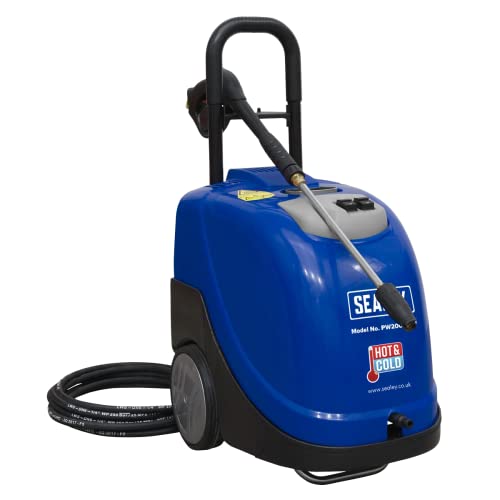
I was surprised that hot water can halve cleaning time; I compare cold versus hot pressure washers to show why heat matters. I evaluate the Sealey PW2000HW and Kränzle 895-1 for performance, build, durability, running costs and suitability and serviceability.
Heavy Duty

I find this unit delivers very capable hot-water cleaning performance that elevates domestic pressure washing into near-commercial territory. However, I note concerns about long-term electrical reliability and the machine’s weight, which reduce convenience for frequent portable use.
Industrial Grade

I consider this a top-tier machine for heavy commercial and industrial cleaning where uptime and durability matter most. Its build and features justify the premium for professional workshops, but the cost and bare configuration require planned investment in accessories.
Sealey PW2000HW Washer
Kränzle 895-1 Cleaner
Sealey PW2000HW Washer
Kränzle 895-1 Cleaner
Sealey PW2000HW Washer
Kränzle 895-1 Cleaner
Performance & Cleaning Effectiveness: Power, Temperature and Flow
Specifications at a glance
I compare the two units on the three core metrics you asked for: pressure (bar), flow (l/min) and working temperature.
How heat changes cleaning performance
From my experience, hot water changes the chemistry and mechanics of cleaning:
Real‑world throughput and task expectations
Using the Sealey (135 bar / 7.0 l/min) you can expect:
For the Kränzle 895-1, because it’s specified as a higher-capacity industrial machine, I expect materially faster throughput on all the above tasks — shorter cleaning times, better continuous duty performance and less need for chemical agitation — but you should confirm exact bar/litre figures with the seller to quantify time savings.
Surface compatibility note: higher pressure and hotter water increase the risk of paint lift, timber damage or striping on soft plastics; always start with a low-pressure rinse and appropriate nozzle.
Feature Comparison
Design, Build Quality and Durability: Materials, Construction and Serviceability
Frame, chassis and external construction
I find the Sealey PW2000HW is built around a compact, wheeled chassis intended for heavy domestic and light commercial use. Its 43.8 kg mass, 8 m hose and 7‑litre tank give it substance but make solo manoeuvring less convenient. The Kränzle 895‑1 uses a markedly more industrial package: heavier‑duty materials, abrasion‑resistant surfaces and German‑grade finishings designed for prolonged site use.
Pump, heater assembly and service access
Ease of servicing and spare parts
I rate the Kränzle higher for serviceability in commercial environments because its modular quick‑change systems and broad dealer network reduce downtime. Sealey offers straightforward parts access for common wear items but some user reports indicate electrical/reliability issues that could increase service frequency.
Warranty, duty cycle and longevity
Overall, industrial materials, modular components and a strong parts network on the Kränzle translate into greater longevity and lower long‑term operational risk, while the Sealey represents a cost‑effective, serviceable alternative for lighter duty profiles.
Safety, Maintenance and Running Costs: Fuel, Efficiency and Compliance
I examine safety features, routine maintenance requirements and operating costs. Topics include fuel or electrical requirements, fuel/energy efficiency, emissions, anti-scalding and pressure‑relief systems, and recommended maintenance intervals. I compare typical consumables and spare‑part costs, and note regulatory or site compliance concerns for hot‑water units, especially in professional or food‑industry contexts.
Power source, emissions and energy efficiency
Both the Sealey PW2000HW and the Kränzle 895‑1 are corded electric hot‑water units, so they produce no on‑site combustion emissions. Heating the water adds significant energy demand compared with cold‑water washers; in practice the Kränzle’s industrial heater design is typically more thermally efficient and recovers temperature faster than lighter domestic units such as the Sealey.
Safety features and compliance
The Sealey listing specifies a Total Stop System (pump stops when the trigger is released) which reduces wear and prevents overpressure. The Kränzle’s “food design” and quick‑change, abrasion‑resistant materials indicate easier compliance with hygiene regimes; however, you should request certificates (CE, hygienic/material conformity) before specifying for food sites.
Routine maintenance and intervals
Consumables, spare parts and running cost notes
Practical Use Cases, Accessories and Ease of Use: Which Model Suits Which User?
Use cases by sector
I see the Sealey PW2000HW as a versatile hot/cold solution for:
I consider the Kränzle 895‑1 tailored for:
Ergonomics and mobility
The Sealey is heavier but rollable; a solo operator can move it short distances but will feel the weight. The Kränzle is purpose‑built for frequent movement on site; heavy components are better balanced and built for lifting or mounting on trolleys.
Hose, reel and accessory options
Control ergonomics and accessory compatibility
I find the Sealey’s Total Stop helpful for casual users to reduce fatigue and wear. The Kränzle offers industrial controls that favour repeatable settings and faster nozzle/lance swaps — vital in production or hygiene‑critical sites.
Setup, storage and user‑friendliness
Setup for both requires proper electrical supply and freeze/protection measures. The Sealey is more user‑friendly for DIY operators; the Kränzle rewards trained operators and facilities that invest in reels and hygienic fittings.
Final Verdict: Which Should You Choose?
I’ve weighed performance, build quality, temperature control and operating cost. For heavy-duty, specialist and food‑industry use the Kränzle 895‑1 is my clear winner — its robust construction, purpose‑built hot‑water performance, food‑grade options and quick‑change fittings make it the professional choice. The Sealey PW2000HW wins on versatility and value: dual hot/cold operation, simpler maintenance and lower purchase cost make it ideal for workshops, rental fleets and homeowners who need flexibility.
Buying checklist — choose Kränzle if you need continuous high‑temperature cleaning, certified food‑industry compatibility and maximum durability; choose Sealey if you want a lower‑cost, easy‑to‑service machine that handles both hot and cold jobs; compare warranty, spare‑parts availability and total cost of ownership before you buy. Check service support, fuel type restrictions and emission compliance for hot washers, and factor expected annual run‑hours and spare‑parts lead times into your decision. Which capability matters most to you?


LOL, people arguing over pressure washers like they’re cars ????
Anyway, does anyone know PSI/flow differences between the two? The article mentioned 135bar for the Sealey — how does that translate? I’m not great with metric pressure math.
135 bar equals about 1,957 PSI. The Kränzle spec varies by model and nozzle but is typically in a similar high-pressure range; check the exact submodel for precise PSI. Flow rates and heating capacity are also important to compare.
Good reminder: higher PSI isn’t everything — GPM matters for cleaning speed. A combo of both makes a big difference.
Also watch the inlet temp limits — some units have caps on how hot the incoming water can be.
Is there any meaningful difference in water consumption between the two? Trying to be eco-conscious and don’t want to blow through a ton of water each clean.
Nozzle choice affects consumption too — a narrower jet uses less volume but increases pressure at the tip.
Flow rate (GPM/lpm) is the key spec for water use. Both machines can have similar pressures but different flow rates — check the l/min figures. Also, hot water can reduce needed scrubbing, potentially saving water by cleaning faster.
Love the detail about the Kränzle being abrasion resistant — we used one in a food plant and the hoses took a beating from carts and still held up. The Sealey would be my backyard buddy though. Different tools for different jobs!
Great perspective. Variety of needs = variety of machines.
Exactly — your use-case really determines the right pick. Kränzle for industrial/continuous use, Sealey for occasional residential or light commercial tasks.
Agreed. It’s not one-size-fits-all.
Does anyone have experience with maintenance costs? I get the Kränzle is tougher, but I’m worried about expensive service visits. Sealey seems cheaper to fix at local shops.
True. I budgeted for a yearly service on the Kränzle; it saved me from a big failure later.
If you’re DIY-savvy, Sealey is friendlier for at-home fixes.
Maintenance costs vary: Kränzle parts are pricier but less frequent; Sealey parts are cheaper but may need replacing sooner. Local service availability also affects costs — Kränzle often requires authorized technicians.
Small rant: dealers sometimes bundle useless accessories. If you buy Kränzle, get the essentials: proper nozzle set and a hose reel if you need tidy storage. No point paying for 10x cheap brushes you’ll never use.
Good tip, Olivia. Buying selected extras that match your cleaning tasks is smarter than accepting every bundle.
Hose reels are underrated for saving time and avoiding kinks.
Agreed. I returned a bundle that had a bunch of nylon brushes I never touched.
Are there big electrical differences? I’m in a small workshop and don’t want to rewire the place. Sealey being 230V sounds ok but any hidden gotchas?
Also check if they need 1-phase or 3-phase power — that’s a dealbreaker for home setups sometimes.
Check the power draw and plug type. Many industrial units need dedicated circuits or specific plugs. The Sealey at 230V often works on standard supplies in many regions, but the Kränzle might require heavier wiring depending on its motor specs.
Better to measure your breakers and talk to an electrician before buying.
I’m torn because I mostly need something for greasy equipment and food prep areas (hence the food-design note). Does hot water make a real difference for sanitizing compared to chemical cleaners? Asking bc I hate dealing with too many detergents.
Hot water + a mild detergent = magic for oils. But check local regs if you need formal sanitation certification.
From my cafe experience: hot water makes clean-ups faster, but we used sanitizer wipes after for the last step. Less chemical spray tho — big win.
Hot water helps break down grease and can reduce chemical needs, but for certified sanitization in food environments you often still need approved detergents/disinfectants. The Kränzle’s food-grade components reduce contamination risks, though.
Thanks for this comparison — super helpful. I’m leaning toward the Kränzle because of the ‘food design’ and quick-change plug-in system. Does anyone know if that makes swapping nozzles way faster in practice? Also, is the Sealey decent for occasional hot-water jobs or is it more of a cold-water machine with a heater slapped on?
Sealey’s fine for weekend projects. If you’re running a business, I’d pick Kränzle. imo.
Good question, Emma. The Kränzle’s quick-change system is genuinely faster for nozzle swaps, especially in a production or frequent-use setting. The Sealey is a true hot/cold unit but it’s more budget-friendly — fine for light-to-moderate hot-water tasks, but it won’t match the Kränzle’s heavy-duty reliability under constant use.
I have the Kränzle at my small bakery — swapping nozzles takes like 10-15 seconds. Worth the extra cash if you change settings a lot.
Quick note: the Kränzle 895-1 seems built like a tank. If you care about longevity and industrial-grade parts, that’s the one. But dang, the price sticker made me gulp. Anyone else splash out and not regret it?
Bought the Kränzle last year for my garage cleaning gigs — no regrets. Parts are pricey but rare to replace. Feels very solid.
Solid build = heavy. Make sure you have a dolly or cart if you move it often. My back still grumbles ????
I sticker-shocked too but it paid off — resale value is good if you ever upgrade.
Thanks for sharing, David. Your experience matches other reports: Kränzle units tend to last much longer under heavy use, which often offsets the initial cost if you use them commercially.
I bought a Sealey PW2000HW for home use and it’s been fine for driveway and garden furniture. Not a pro, but the hot mode does help remove bird droppings and oil stains better. Couple things: it’s a bit noisy and the hose management isn’t as neat as the Kränzle (no reel), but for the price? Totally OK.
Thanks for sharing your hands-on view, Lucy. That’s exactly the kind of trade-off homeowners face: price and convenience vs commercial features.
Yep, if you only clean occasionally the Sealey is sensible. Save money and avoid overkill.
Humorous take: if you’re the ‘I fix everything myself’ type, buy the Sealey. If you’re the ‘pay for quality and drink coffee while it runs’ type, buy the Kränzle. ????
But for serious work, Kränzle’s no reel might seem odd — you can add one, though.
This made me laugh and think very hard about my cleaning personality ????
Nice summary, Zoe. Personality-based buying guide — I like it. And yes, hose reels are commonly added as aftermarket upgrades.
Minor rant: why do some sellers list ‘hot/cold’ like it’s a gimmick without giving real heating specs? I want max temp and recovery time, not marketing fluff. Kränzle had the numbers. Sealey? Not so transparent.
Yep, I had to hunt through manuals and forums for the Sealey temps. Annoying but doable.
Agreed — actual temperature rise and recovery rate are crucial for hot-water units and should be listed clearly. We’ll look into adding a spec comparison table in a follow-up post.
A spec table would be ace. Makes decision-making so much faster.
Funny story: thought hot-water meant ‘instant boiling steam’ — nearly toasted a plastic grill cover trying to be clever. PSA: check recommended temps ????
But seriously, hot water is great for grease. If you’re cleaning food equipment daily, the Kränzle’s food-grade bit is worth it.
That made me chuckle — same here when I first used mine on a vinyl seat. Lesson learned!
Hah, glad it was just a near-miss! Yes, check manufacturer limits and instructions — misuse can damage components or items you’re cleaning.
And ventilate if using hot water inside — steam + chemicals = bad mix.
Pro tip: test on a small area first. Saved me a ruined cushion once.