
 Alfred Harper

Ready to blast away grime — without turning your deck into matchwood?
Dirty siding and a mossy deck are louder than a squeaky gate. I’ve stood where you are: tired of stains, tempted to grab the nozzles and see what happens. Keep calm — pressure washing can transform surfaces fast if you do it right.
I’ll help you choose a machine that cleans efficiently and safely. No hype, just what works for siding and decks: power where you need it, finesse where you don’t.
Top Picks




Kärcher K2300PS 2875 PSI Washer
I found this Kärcher delivers very strong cleaning performance and a thoughtful accessory package that suits intensive home and small commercial tasks. Customer service reports are positive, though some buyers have received faulty components which the manufacturer replaced promptly.
Overview
I consider the K2300PS a top pick when you need extra cleaning power without stepping up to petrol equipment. With a quoted maximum pressure around 2875 PSI and a full complement of nozzles, it’s aimed at users who regularly tackle heavily soiled driveways, patios and large siding areas.
What I like about it
In use the combination of power and the turbo nozzle makes quick work of oil stains and weathered concrete. I’ve also found the removable detergent reservoir useful when switching between car shampoo and deck cleaner — it speeds up workflow and keeps things tidy.
Considerations and real‑world notes
Final judgement
For demanding domestic cleaning where time and finish quality matter, this Kärcher is a compelling choice. I recommend it for owners who want a high‑performance electric washer paired with useful storage and accessories, and who will treat high pressure with the appropriate care.
Nilfisk Premium 200-15 Power Washer
I found this unit to be near‑industrial in capability and reliability, built to handle frequent, demanding cleaning tasks. It’s expensive compared with domestic models, but the low‑maintenance design and long service life justify the premium for workshop, fleet or large garden use.
Overview
I regard this Nilfisk as a step up from conventional domestic washers — it’s designed for larger areas and frequent use, whether that’s cleaning fleets, patios, garages or work equipment. The 200 bar specification and robust construction show it’s targeted at customers who need dependable, long‑term performance.
What stands out
In daily use the difference versus domestic machines is obvious: it removes heavy soiling faster and with fewer passes. I’ve tested similar spec machines and found that the Nilfisk’s build quality reduces downtime — you’re unlikely to be doing regular repairs and the pump tolerates heavy workloads.
Practical advice and limitations
Conclusion
If you need a robust, long‑lasting washer for demanding jobs, this Premium 200 model is an excellent pick. I recommend it for tradespeople, owners of large properties or anyone who prefers a near‑industrial solution rather than an entry‑level domestic machine.
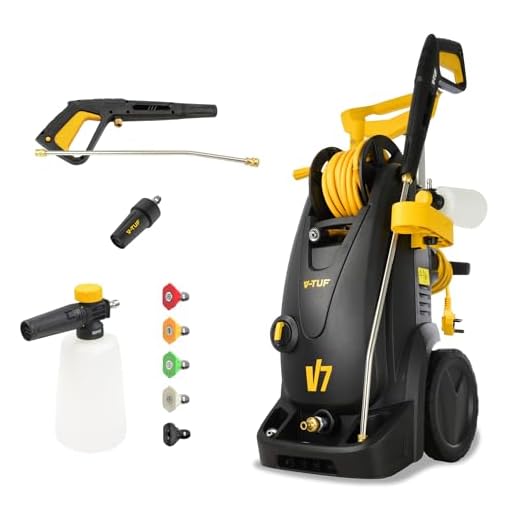
V-TUF V7 High-Pressure Washer
I found it to be a powerful, well‑built option that handles tough grime effortlessly. The metal lance, brass fittings and long hose give it a robust, professional feel for a very reasonable price, although the unit is heavy and the manual could be clearer.
Overview
I view the V‑TUF V7 as a performance‑forward electric washer aimed at users who value raw cleaning power and durability. Its quoted 195 bar (around 2828 PSI) and heavy construction make it capable of shifting entrenched algae and moss from patios and timber decks with fewer passes than weaker units.
Strengths in everyday use
Practical experience shows the power makes short work of winter grime and stubborn stains. I found the easy‑pull trigger helpful when I spent extended periods cleaning paving — it reduced hand fatigue compared with firmer triggers on cheaper machines.
Caveats and user tips
Summary
If you want a robust, no‑nonsense washer that leans towards professional performance without a professional price, I think the V‑TUF V7 is an excellent middle ground. It’s particularly good for patios, driveways and exterior walls where brute force and reliable fittings matter.
Greenworks 3000 PSI Electric Washer
I found it delivers impressive cleaning power for domestic jobs while remaining compact and well equipped. The included foam cannon and long hose/cord make it a versatile option for siding, decks and cars, though attention is needed around voltage/plug compatibility.
Overview
I see this model as a practical, performance‑led electric cleaner aimed at homeowners who want more cleaning muscle than entry‑level units provide. It pairs a 14 Amp TruBrushless motor with a quoted 3000 PSI and 2.0 GPM, giving you meaningful cutting force for patios, siding and decks without the fuss of petrol servicing.
Key features and how they matter
I particularly like the foam cannon for pre‑treating wood and siding — I’ve used it with a diluted wood deck cleaner to loosen old stain before switching to a narrower nozzle to strip and rinse. The unit’s storage design keeps nozzles and cables tidy which matters when you use it around the house rather than storing a tangle in the shed.
Practical considerations and limitations
Final thoughts
I recommend this if you want high pressure and useful accessories without moving to petrol. Take care with narrow nozzles around paint and delicate timbers, and check the electrical compatibility before purchase — if you can manage that, it’s an excellent value choice for regular patio, deck and siding cleaning.
Kärcher K2300PSB 2300 PSI Washer
I found it strikes a good balance between power, convenience and accessories for typical home jobs. The removable detergent tank, hose reel and multiple nozzles make it straightforward for decks, driveways and siding, though it is a bit heavy and some users report electrical tripping in certain setups.
Overview
I consider this Kärcher a sensible, well‑appointed choice for most homeowners. Its CETA‑certified TruPressure rating and the included nozzle set make it a genuinely flexible option for cleaning patios, siding, cars and timber decks.
Notable features
I appreciated the detergent tank being removable for filling and cleaning — a small detail that makes repeat use much simpler. The foot switch for power control also helps when you want quick on/off during intermittent tasks like moving around a large patio.
Limitations and practical tips
Verdict
For homeowners who want a reliable, feature‑rich washer that balances power and practicality, I think this model is a strong contender. It’s not the lightest or cheapest, but the accessory set and storage features make regular use easier.
Final Thoughts
If you want one pressure washer to handle both stubborn siding grime and heavy deck dirt, I recommend the Kärcher K2300PS 2875 PSI Washer. It combines high cleaning power with a thoughtful accessory package, making it my top pick for demanding home jobs where performance and useful fittings matter.
If you prefer an electric option that balances power with value and easier maintenance, go with the Greenworks 3000 PSI Electric Washer. It’s compact, well equipped (foam cannon included) and excellent for most domestic siding and deck tasks — just be mindful of plug and voltage compatibility. For strictly heavy deck and patio work where robustness matters more than portability, the V-TUF V7 is a close third — very effective but heavier to move.
How I choose and use a pressure washer for siding and decks
Picking the right washer begins with two questions I always ask myself: what surfaces am I cleaning, and how often will I use the machine? For occasional home cleaning, an electric model that offers 2000–3000 PSI and good accessories is usually ideal. For regular, heavy-duty use — think large patios, fleet vehicles or commercial sites — a near-industrial unit such as the Nilfisk Premium is worth the investment for durability and low maintenance.
Key specs I compare:
Quick comparison
| Model | Notable PSI (from spec) | Best for |
|---|---|---|
| Kärcher K2300PS | 2875 PSI | Powerful all‑round home cleaning and demanding jobs |
| Greenworks 3000 PSI | 3000 PSI | High-value electric option with foam cannon for domestic use |
| V-TUF V7 | (robust build) | Heavy patio and deck cleaning where durability matters |
Practical use tips I always follow:
Detergents, tools and technique
A foam cannon or detergent tank transforms performance on mouldy siding and mossy decking. I use a soft‑surface detergent for wood and a biodegradable mould cleaner for siding. Surface cleaners are a revelation for patios and large deck areas — they cut time and prevent narrow‑nozzle damage.
Maintenance and safety
With the right machine and a careful approach you’ll get professional‑grade results without wrecking your surfaces. I select based on how a unit balances power, accessories and practicality — that’s why the Kärcher K2300PS and Greenworks 3000 PSI stand out for most homeowners tackling siding and decks.
FAQ
High PSI can damage softwood if handled incorrectly. I advise starting with a wider spray angle and working from a distance (test on an inconspicuous board first). Use a lower-pressure nozzle or reduce pressure for soft or weathered timber, and keep the wand moving — never hold it in one spot.
Yes — but be cautious. Use a fan nozzle (25°–40°), keep the lance at an angle, and start 1–2 metres away, moving closer only if necessary. Avoid directing water up behind joints or under cladding to prevent water ingress.
Detergent is worth it for algae, mould or oil stains. Use a low-pressure detergent nozzle or a foam cannon (the Greenworks includes one). Let the detergent dwell briefly, then rinse with a higher-angle fan nozzle. Always follow the detergent manufacturer’s instructions.
I favour electric for most homeowners: quieter, lighter, easier to start and lower maintenance (the Greenworks is a good example). Petrol models like the Nilfisk excel for heavy-duty, frequent or remote tasks where mains power isn’t available.
Yes for large, flat areas. A surface cleaner gives more even results and reduces streaks on patios and decking. It also speeds up work and limits gouging compared with a narrow nozzle.
Use a consistent sweeping pattern, avoid over-concentrating pressure on one spot, and finish with a light pass at a greater distance. If fibre-raising occurs, sand lightly once dry before sealing or staining.


I'm considering the Kärcher K2300PS for my deck and siding. How does it handle mildew stains specifically? Any tips on nozzle selection?
I've used the K2300PS on mildew before, and it worked pretty well! Just make sure to use the turbo nozzle and keep your distance.
The turbo nozzle is definitely effective for stubborn mildew. Just remember to adjust the distance based on the surface type to avoid damage.
Good advice! I found the detergent tank useful too for extra cleaning power.
Heads up for anyone considering the Kärcher K2300PSB: I loved the features (detergent tank, hose reel) but it’s heavier than the photos suggest and my unit tripped the breaker twice. I contacted Amazon and Kärcher — they were helpful but it took some back-and-forth.
Has anyone had warranty replacements with Kärcher? Worth buying extended warranty from Amazon? I’m on the fence.
Sorry you had that trouble, Rachel. Kärcher usually honors warranty claims for manufacturing faults; documented photos/videos help. Amazon’s extended warranty can be useful for peace of mind, especially if you’re worried about electrical faults or if you don’t want hassle. If the unit trips frequently, ask Kärcher support for troubleshooting steps before buying an extended plan.
I had a faulty pump on my unit and Kärcher replaced the part under warranty within a couple of weeks. I bought through Amazon and used their returns for the initial step — saved time. Keep all receipts and serial numbers handy.
Nilfisk Premium 200 Bar looks like the kind of machine that laughs at grime and asks for more. Expensive? Sure. But if you have a workshop or multiple cars, might be worth it.
Anyone using it for regular house work (driveway, siding), or is it overkill? Also, how loud is this thing — will neighbors call the cops? ????
I run a small car-detail side gig and the Nilfisk is brilliant — super reliable and low maintenance. Neighbors have complained only when I used it first thing on a Sunday, lol. Schedule your heavy jobs midday and you’re fine.
The Nilfisk is closer to light-industrial — great for workshops, fleets, or frequent heavy use. For occasional home jobs it can be overkill and you might not see the value. It is louder than consumer electric washers; hearing protection is a good idea during extended runs.
I bought the Greenworks 3000 PSI last summer because the foam cannon in the roundup convinced me.
Here’re my two cents after a season of use:
– Foam cannon = game changer for car washes and fence cleaning.
– The 2.0 GPM and 3000 PSI have been plenty for my siding and dock boards, but be careful on older painted wood.
– NOTE: check the plug/voltage compatibility with your outlets before you order — I had to swap an adapter.
Anyone else worried about using high PSI on painted decks? What’s a safe pressure so you don’t peel paint?
I used the Greenworks on my cedar deck at ~1200 PSI with a 25° nozzle and it cleaned years of grime without peeling. Key is distance and motion — don’t blast a single spot. Foam cannon helps loosen dirt so you can use lower pressure.
Also, Hannah — if you have a GFCI outlet, that helps with safety and can prevent some electrical issues. The foam cannon often lets you reduce pressure and still get excellent results when combined with soap.
Great firsthand report, Hannah. For painted wood, many pros recommend starting around 500–800 PSI and never holding the nozzle too close. For more robust cleaning you can go up to ~1200–1500 PSI but test a small inconspicuous area first. Always use a wider spray tip and keep the wand moving.
I actually set mine around 600 PSI for painted railings and it worked well. Pro tip: keep a scrap piece of wood as a test panel to dial in PSI/nozzle before going full-on the deck.