
 Alfred Harper
I’ll show why choosing a commercial rather than a residential pressure washer can halve your cleaning time — and when that bold step would actually be wasteful.
Ready to blast grime? I compare commercial and residential pressure washers by examining two Amazon listings — the Kärcher compact hot-water high-pressure cleaner (eco mode + steam) and Hyundai hot pressure washer — to help you choose the right machine.
Industrial Grade

I find this machine delivers professional-grade cleaning power and excellent thermal performance for heavy-duty tasks. It is robust and well engineered for workshop or façade work, though its weight and running cost make it best suited to commercial users.
Workshop Ready

I consider this a capable hot-pressure washer for workshop and vehicle cleaning where electric power is preferable. It offers strong heat and decent flow for its class, but its weight and mixed reports on reliability mean I would ensure local support and warranty cover before purchase.
Kärcher HDS 6
Hyundai HY150 HPW
Kärcher HDS 6
Hyundai HY150 HPW
Kärcher HDS 6
Hyundai HY150 HPW
Design, Build Quality and Intended Use
Kärcher — compact, purpose-built mobility
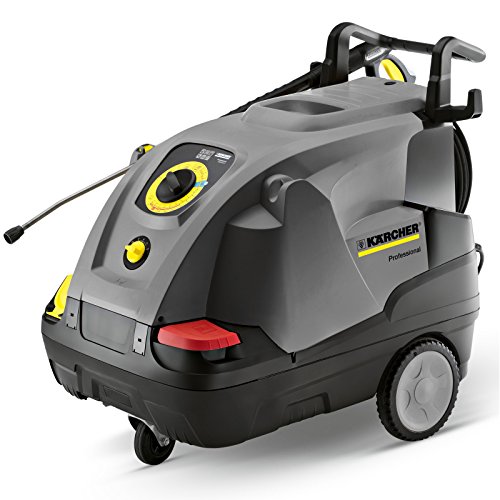
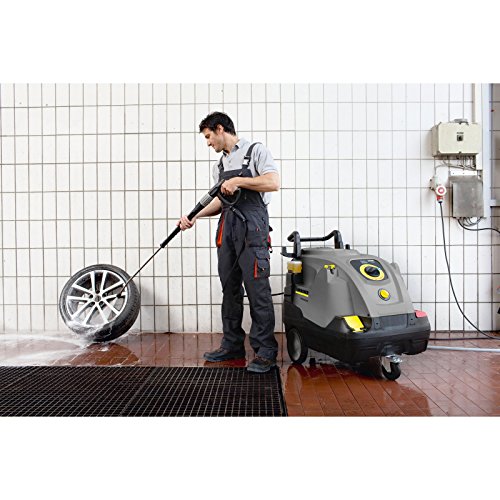
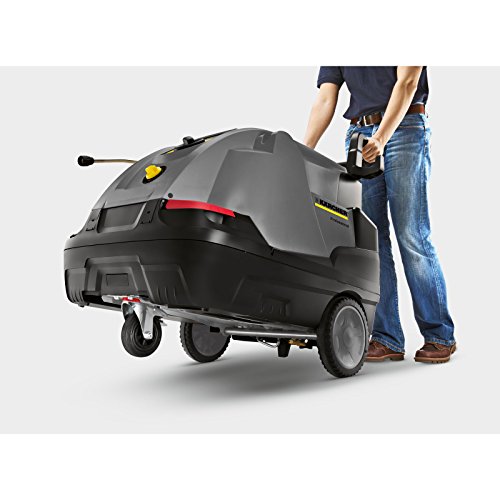
I see the Kärcher HDS 6/12 C as a compact, professionally engineered hot‑water unit. Its “jogger” design, large wheels and integrated tilting aid show it is built to be moved around workshops and light commercial sites. The metal chassis, central one‑button control and lockable accessory compartment point to a machine designed for frequent use but with a footprint that remains relatively compact (1060 × 650 × 920 mm). The steam function and eco!efficiency diesel setup mark it clearly towards heavy‑duty cleaning and industrial degreasing rather than simple garden use.
Hyundai — heavy‑duty specification, floorstanding presence
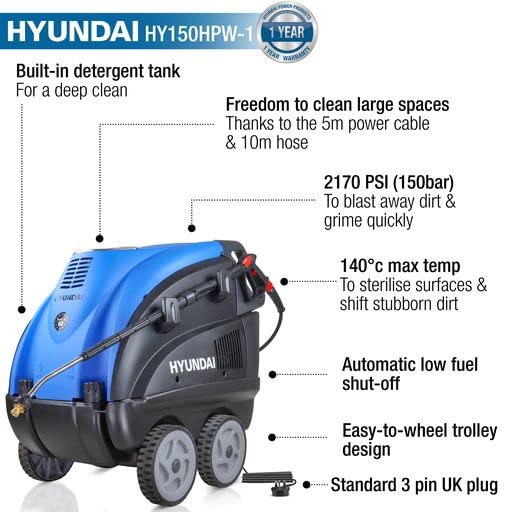
The Hyundai HY150HPW‑1 reads like a brute of an electric hot washer: 2.8 kW motor, 2170 PSI, 11 L/min flow and a 10 m hose. At roughly 92 kg and a large floorstanding footprint (approx. 90 × 65 × 94 cm) it looks intended for workshop bays, vehicle fleets and semi‑industrial use. The mix of plastic, alloy, aluminium and steel suggests cost‑aware construction but serviceable durability. Long hose and professional lance storage are useful for fixed‑site tasks but make it less attractive for frequent transport.

Chassis, storage and jobsite durability — quick comparison
Hot‑water and situational considerations
Hot water and steam (Kärcher) deliver superior degreasing and sanitising for industrial grime. Hyundai’s high temperatures and long hose excel for vehicle and workshop cleaning where weight and a robust fixed base are acceptable. Choose compactness if you move between sites regularly; choose robustness and longer reach if you run a fixed workshop or fleet.
Power, Temperature and Cleaning Performance
Hyundai — power, PSI and hot‑water punch
I read the Hyundai spec as a high‑pressure electric hot washer aimed at heavy workshop work: 2.8 kW motor, 2170 PSI (≈150 bar) and a strong flow of 11 L/min. Its vertical boiler claims up to 110°C, which gives a real advantage for cutting grease and sanitising vehicle surfaces without the complexity of a diesel burner. In practice that PSI/flow combination will dislodge mud, moss and general road grime quickly; oil and baked‑on grease respond far better when combined with heat and detergent.
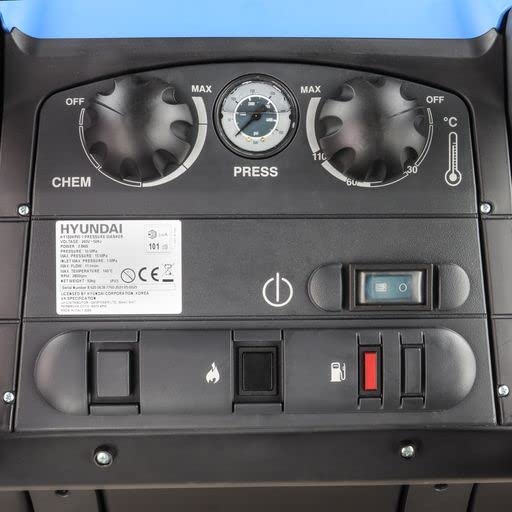
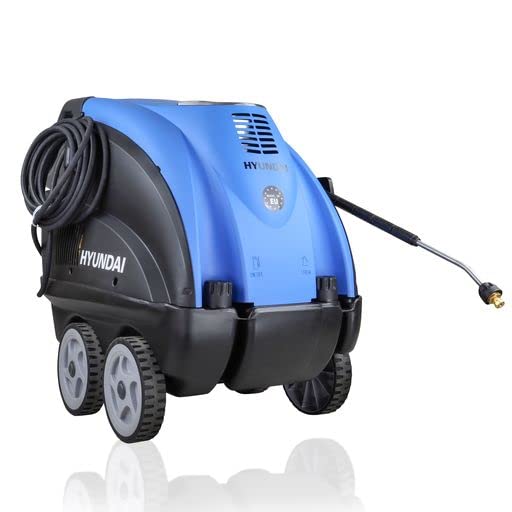
Kärcher — steam, higher temperature range and controlled efficiency
The Kärcher HDS 6/12 C offers a wider temperature window (listed 80–155°C), pressure range 30–120 bar (≈435–1740 psi) and a variable flow 240–560 L/h (≈4–9.3 L/min). The steam function and eco!efficiency mode make it superior for heavy degreasing and sanitising: steam softens carbon and oil while hot water rinses them away. Eco!efficiency reduces diesel consumption by about 20%, so you save fuel on long jobs while retaining cleaning power.
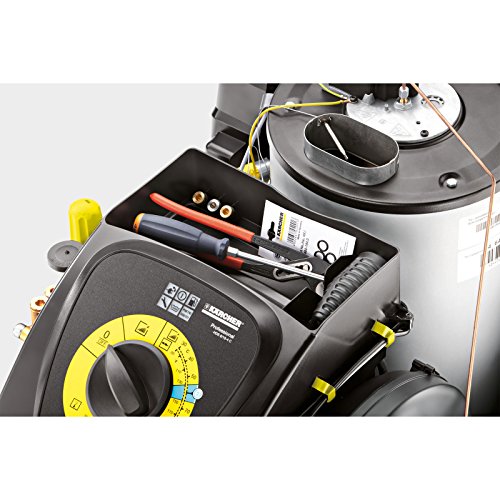
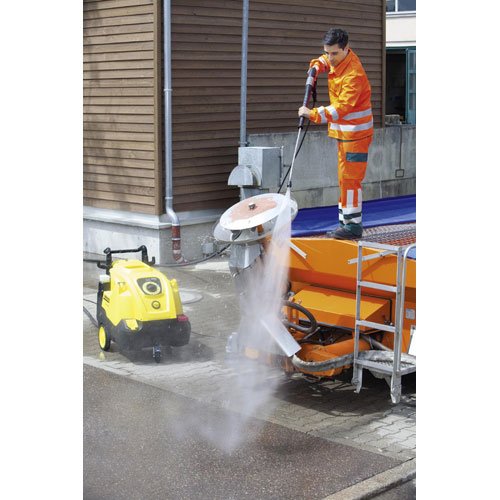
How specs translate to results and checks I recommend
I recommend buyers verify actual PSI, flow (L/min), sustained outlet temperature under load, detergent dosing accuracy and heat‑recovery/run‑time on site before purchase.
Usability, Safety and Maintenance
Controls and initial setup
I find the Kärcher’s central one‑button selector and clear service indicators make setup and mode switching (eco!efficiency vs steam) straightforward for routine work. The Hyundai comes ready with a high‑pressure trigger gun and a 700 mm lance with high/low regulation; the built‑in detergent tank simplifies dosing for repeated wash cycles. Both machines are floor‑standing and need two people to lift safely.
Hoses, cords and accessory compatibility
Hyundai specifies a 10 m high‑pressure hose and a 5 m power cord — generous reach that reduces repositioning. Kärcher offers large hose hooks or reels and lockable accessory storage, so nozzles and lances stay organised. Both accept standard commercial nozzles and spray lances, but check nozzle fittings before buying accessories.
Safety features and recommended PPE
Kärcher’s Machine Protector system and service indicators help prevent component overload; Hyundai’s supplied trigger gun includes a lockable trigger (common on professional guns). For hot‑water machines I always confirm the presence of a thermal cut‑out, pressure‑relief valve and insulated thermal guards before use. I also insist on PPE:
Routine maintenance and service expectations
Routine upkeep is predictable but essential. I recommend these minimum tasks:
Spare parts and authorised service are widely available for Kärcher (strong dealer network); Hyundai parts are available but may require dealer contact. Warranty affects ownership effort: Hyundai includes a one‑year warranty; Kärcher adds a 3‑year burner coil warranty and strong after‑sales support — factor that into long‑term maintenance planning.
Cost, Value and Suitability: Commercial or Residential?
Purchase price and running costs
I compare list price to likely operating costs. The Kärcher (~£3,120) is a higher initial outlay; diesel and burner maintenance add ongoing cost, but its eco!efficiency mode claims ~20% lower diesel use. The Hyundai (~£1,999) is cheaper to buy and runs on mains electricity (2.8 kW) — lower day‑to‑day fuel spend but higher electricity draw during long cycles. Detergent consumption will be similar and depends on dosing settings.
Expected lifetime and serviceability
I expect the Kärcher’s heavy‑duty German build and Machine Protector system to outlast the Hyundai in intensive commercial work; longer warranty on the burner and wider authorised service network reduce downtime risk. The Hyundai is sturdy for its price but likely requires more frequent attention under continuous use.
Feature value for professional jobs
I value steam and eco modes for pro tasks: steam gives faster degreasing and sanitising; eco mode reduces fuel bills on long shifts — both valuable for workshops and façade work. Hyundai’s high boiler temperature and generous 10 m hose are strong value points for lighter commercial and mixed jobs.
Typical buyer profiles
Decision checklist
Feature Comparison Chart
Final Verdict
I’ve weighed each machine’s strengths against typical needs. For most users who need maximum cleaning power, durability and longer reach, the Hyundai unit is the clear winner: it delivers the higher stated pressure, extended hose and integrated detergent tank that suit heavier or frequent tasks. The Hyundai’s robust electrical and heating specification and longer working reach make it better suited to small commercial jobs, fleet cleaning and regular site maintenance. If your priority is efficient hot-water and steam cleaning, compact storage and energy-saving operation, choose the Kärcher-style compact hot-water cleaner instead. Its eco-efficiency mode and steam function reduce chemical use and running costs, and its smaller footprint suits garages, workshops and domestic storage.
Before you buy, verify PSI, flow and maximum temperature against independent tests, check duty-cycle ratings and confirm warranty coverage, response times and service locations. Also consider real-world hose length, accessory availability, consumable costs and whether on-site repairs are straightforward. I recommend Hyundai for small commercial operators, contractors and anyone stripping heavy grime; I recommend the Kärcher for homeowners, light-maintenance businesses and operators who prioritise compactness and energy savings. Will you prioritise raw power, reach and detergency, or efficient steam cleaning with lower running costs? If possible, arrange an in-person trial or request detailed video demonstrations to confirm heating recovery rates, trigger comfort, accessory compatibility and realistic cleaning speed under load. Buy wisely before purchasing.


Skeptical take: people often overbuy based on spec sheets. 2170 PSI sounds impressive until you realize technique, nozzle selection, and detergent matter more.
If you mostly clean cars and patios on weekends, either of these will do fine. If you’re doing heavy commercial work, look for higher-duty, serviceable models.
Solid point, Tom. User technique and the right attachments matter a lot. The article tries to reflect that but I’ll add a ‘how to choose’ checklist for readers.
100% — nozzle selection changes everything. A 25° or 40° nozzle can be gentle yet effective for different tasks.
Heads up — anyone planning to use these for commercial gigs: check duty cycle and motor cooling.
Kärcher is marketed as compact and efficient, but compact doesn’t always mean built to run all day. The Hyundai’s 2.8kW motor sounds strong, but again, check continuous run specs.
I do pressure washing for a small business and had to replace a cheaper unit after it overheated on long jobs. Don’t underestimate the cooling and thermal cutouts.
Excellent point, Priya. I’ll add a section about duty cycle and how home vs light-commercial labeling can be misleading.
Totally — and keep spare nozzles. They wear out and change spray patterns, which affects effectiveness.
Adding maintenance tips to the article is now on my list — thanks for the suggestions.
Also, filter your water or you can clog the inlet. Simple maintenance extends life a lot.
Agreed. I burned out a cheap electric unit last summer doing patios back-to-back. If you plan to do regular commercial work, consider a true commercial-rated machine or gas units.
Short and sweet — I went with Hyundai because the price was right and the detergent tank is handy. The cord and hose lengths are decent too. Not as fancy as Kärcher but gets the job done.
Thanks for sharing, Marcus. The built-in detergent tank is a common reason people choose the Hyundai — good to hear it works well for you.
Same here, Marcus. For my driveway and car wash days the Hyundai’s been solid. Less bells and whistles but reliable.
I laughed at the ‘eco efficiency mode’ — is that a fancy name for ‘use less power’? ????
But honestly, if it reduces electricity use and still cleans well, I’m sold. Anyone measured power draw for the Kärcher in eco mode?
Eco modes typically reduce pump speed or cycle the heating element to save energy. I don’t have measured draw numbers yet, but I can try to source them and update the post.
No meter here, but my electric bill didn’t spike when using eco mode compared to full power. For casual home use it feels ‘good enough.’
Cool — thanks. Sounds like eco mode is a reasonable trade-off for home use.
Confession: I bought the Kärcher because I liked the brand aesthetic… ????
Turns out the steam function is more useful than I expected for patio furniture and grimy BBQ grates. It’s compact so I can stash it in the shed. If space is a factor, consider Kärcher.
Any thoughts on noise? My neighbor complained when I used a gas one last year; electric units like these should be quieter, right?
Electric units like both of these are generally quieter than gas. I’ll add a short note about sound levels to the comparison.
Brand loyalty is real — happy it’s working out for you, Sophie. Compact design frequently wins for homeowners.
Haha same — picked it for looks and ended up impressed with performance. But if you’re blasting away heavy moss, combine steam with a higher PSI or a proper nozzle.
Quick question: does the Hyundai actually hit 140°C like some specs claim, or is that hype? Also, PSI 2170 seems meh compared to some other units, but maybe heat makes up for it?
Good catch. The 140°C is likely a theoretical or peak figure under specific conditions. Real operating temps are closer to 100–110°C. Heat helps loosen grime, so lower PSI+heat can match higher PSI cold-water cleaners for some soils.
Also, remember hot water can make certain surfaces more sensitive. Test a small patch first.
Thanks — makes sense. So for grease, go hot; for paint stripping you’ll need more PSI or a different method.
Neutral take: both have strengths.
Kärcher = nicer features (eco/steam)
Hyundai = brute PSI and value
If you need industrial-level durability, maybe neither — but for homeowners, both are solid.
That’s a fair summary, Harold. The article aims to help readers pick based on use-case (home vs light-duty commercial).
Yep. It’s all about matching to your needs. I alternate between a small electric and a hired gas unit for big jobs.
Minor complaint: the spec comparison table in the article could be clearer about cord/hose lengths and warranty differences.
Hyundai lists 10m hose and 5m power cord with 1-year warranty — that’s useful info for deciding placement and storage. Kärcher’s compactness is great but what about warranty and included accessories?
Great suggestion, Natalie. I’ll expand the specs table to list hose/cord lengths and warranty details for each model so readers can compare placement limitations and included accessories.
Updated: I’ll aim to add an accessories row and warranty clarification in the next revision.
Exactly. Little extras matter when deciding which to buy.
Agree on accessories — some models include surface cleaner nozzles, others don’t, and that can change the value proposition a lot.
Great breakdown — thanks for this comparison!
I’ve been weighing the hot-water features vs raw PSI. The Kärcher’s steam function and eco mode sound amazing for stubborn grease on garage floors, and the compact size is a win for small storage spaces.
That said, Hyundai’s 2170 PSI and built-in detergent tank seem like a really practical package for general outdoor cleaning. Anyone tried both on engine degreasing or concrete stains?
Also, the temps listed are confusing (140°C vs 110° max?) — can someone clarify which machine actually gets hotter?
Good question, Emily. The article pulled specs from different sources — the Hyundai’s marketing lists a peak temp but real-world max is generally closer to 110°C. Kärcher’s steam function is meant for high-temp cleaning but actual working temps vary by model and safety settings.
I own the Kärcher compact. For engine bays, the steam mode is gentle but effective. It doesn’t need crazy PSI when heat loosens the grime. But for large patios, PSI (like Hyundai’s) is faster.
If anyone wants, I can add a short note to the article clarifying the temp specs and the difference between rated peak temp vs operating temp.