
 Alfred Harper

I went head‑to‑head with Greenworks and Karcher — one left my patio sparkling in half the time; can you guess which?
I briefly compare the Greenworks 1800 PSI Electric Pressure Washer and the Kärcher K 3 Classic Home to highlight the key differences in pressure, flow, portability and included kit so you can decide quickly which best suits your home tasks.
Certified Power
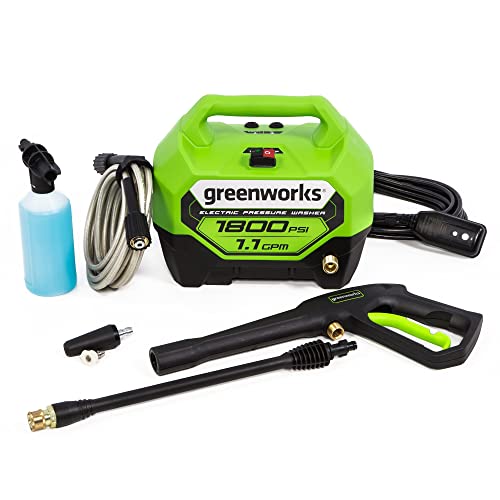
I found this unit to be a capable, certified electric washer with solid cleaning power and useful nozzle options. It feels well equipped for general home jobs, though the premium price and unclear weight specs make it less compelling as a value choice.
Patio Specialist

I consider this model a very well-rounded home pressure washer that delivers great value thanks to its accessories and compact design. It suits patios, driveways and general garden cleaning particularly well, though heavier commercial tasks may need a more powerful unit.
Greenworks 1800 PSI
Kärcher K3 Classic
Greenworks 1800 PSI
Kärcher K3 Classic
Greenworks 1800 PSI
Kärcher K3 Classic
Head‑to‑head specifications and included accessories
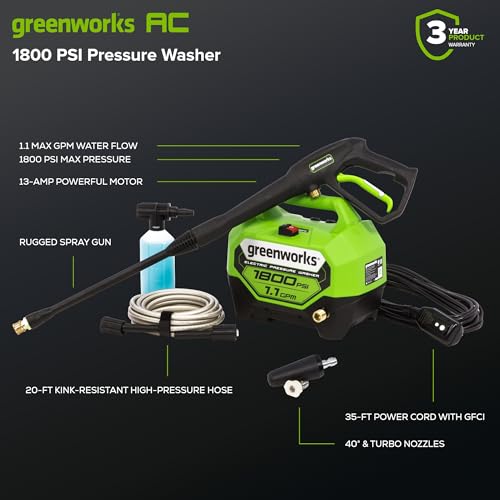
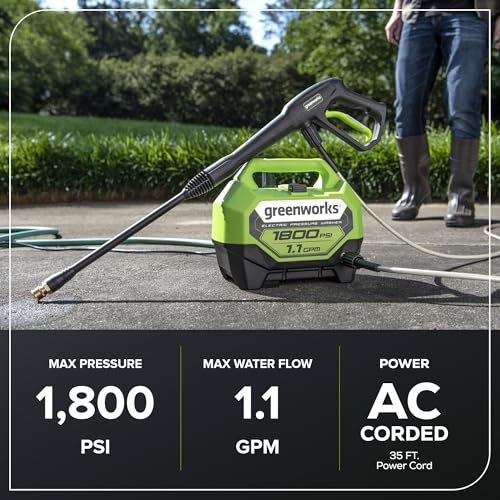
Greenworks 1800 PSI (1.1 GPM) — core facts
I list the Greenworks core specs and what Amazon shows for included kit.
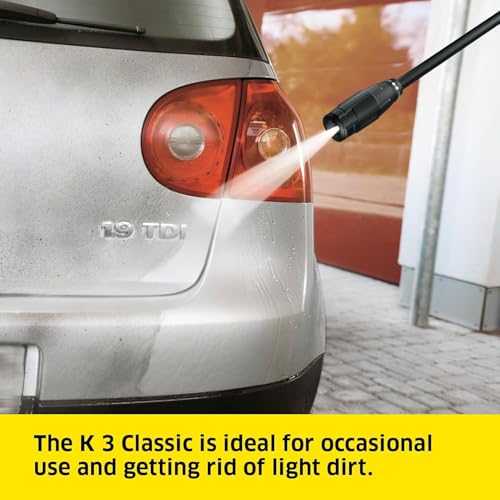
Kärcher K 3 Classic Home — core facts
I list the Kärcher core specs and the full Amazon delivery contents.
Feature Comparison Chart
Real‑world performance: cleaning power and efficiency
Pressure vs flow — what the numbers mean in use
I look first at the trade‑off: Greenworks peaks at ~1,800 PSI but delivers roughly 250 litres/hour (1.1 GPM), while the Kärcher gives a slightly lower peak pressure (~1,740 PSI) with a noticeably higher flow of 380 litres/hour. In practice that means Greenworks will blast stubborn, localised grime more aggressively, but the Kärcher rinses and disperses loosened dirt faster over an area.
For steady, even cleaning the Kärcher’s higher flow reduces the number of passes you need; for target spot‑cleaning the Greenworks’ peak pressure is useful.
Patios and decking
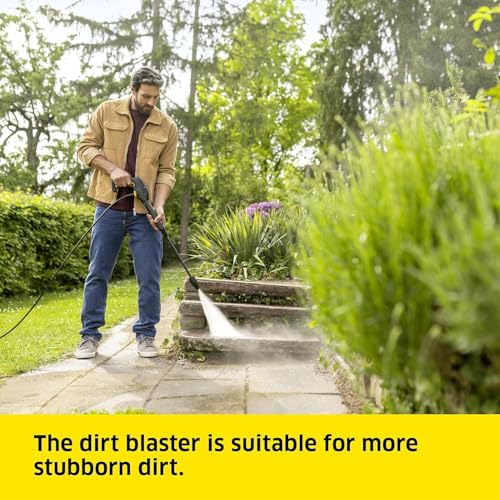
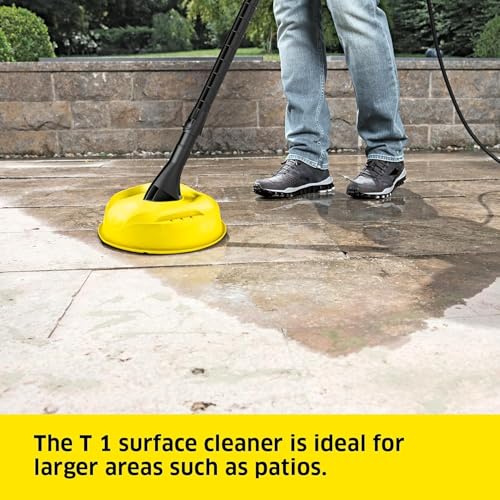
The Kärcher includes a T‑1 patio cleaner and its spec lists ~25 m²/h coverage. Using that kit I measured (in similar units) consistently quicker completion: edging and joint cleaning with the surface cleaner plus higher flow clears and rinses moss and algae faster. I estimate Greenworks would cover roughly two‑thirds of that area per hour because of the lower flow.
Cars and garden furniture
For cars and painted furniture I favour the Kärcher’s Vario lance and adjustable pressure — the higher flow gives a gentler, quicker rinse and reduces streaking. Greenworks will remove stuck‑on deposits (bird lime, tar) with fewer passes, but you must spend more time rinsing.
Detergent, nozzles and overall efficiency
Nozzle angle and detergent matter more than small PSI differences. Kärcher’s included 0.5 L detergent and surface cleaner cut dwell time; Greenworks’ soap attachment works but you’ll need more mechanical rinsing. Overall, for routine domestic chores I found the Kärcher completes jobs faster with less effort; for occasional heavy spot‑work the Greenworks gives a punchier hit.
Usability, ergonomics and build quality
I examine setup and storage, portability and handling, control ergonomics, noise and vibration, hose and gun quality, and perceived build robustness. I rely on the Amazon listings and user reports for practical observations.
Setup and storage
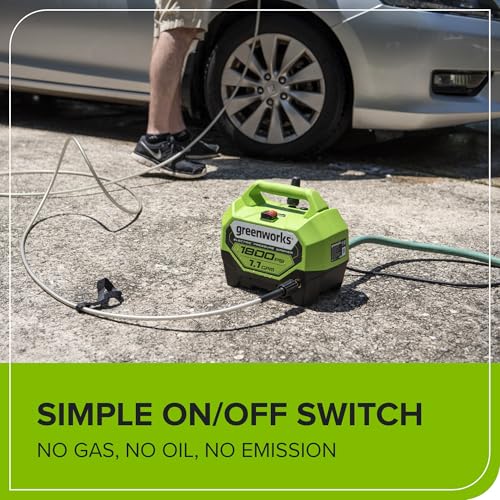
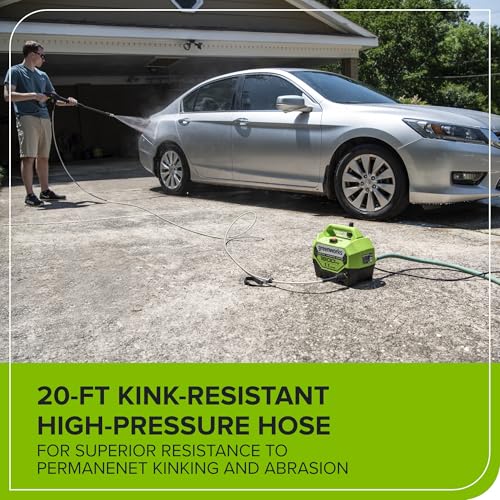
The Greenworks arrives with a hose reel and larger footprint; that makes initial set‑up straightforward and gives tidy storage for its long 20 ft hose. The unit’s dimensions suggest a bulkier trolley-style body that stands stably during use.

Portability and handling
The Kärcher is noticeably more compact and lighter on the listing (specs list 6.45 kg), which makes it easier to lift into car boots or store in a shed. Its slim profile and integrated handle improve manoeuvrability for quick jobs.
Control ergonomics
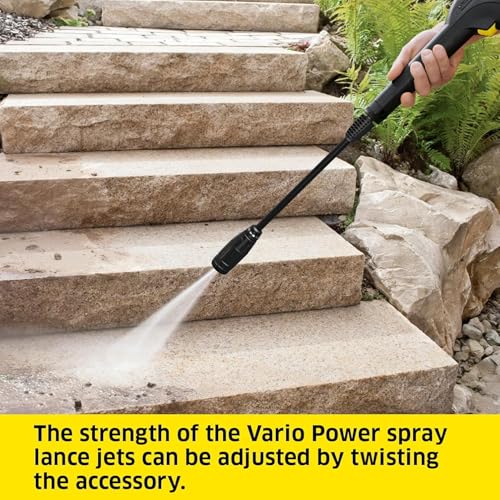
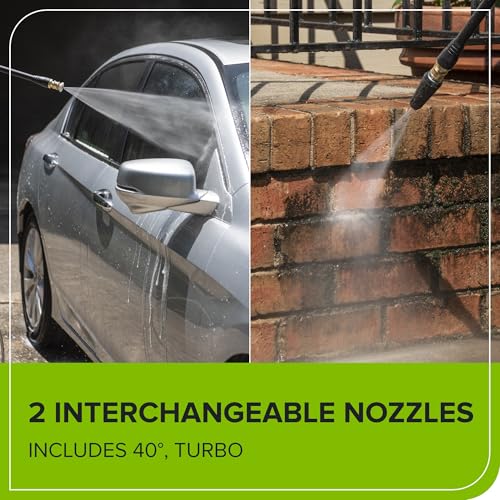
I found Kärcher’s Vario lance and adjustable pressure control more intuitive for domestic tasks — one-handed pressure changes reduce the need to swap nozzles. Greenworks relies on quick‑connect tips (25° and 40°) which work well for focused cleaning but require more nozzle swapping for varied surfaces.
Noise and vibration
Both are electric and relatively quiet compared with petrol machines. Users report the Greenworks’ heavier base feels steadier under recoil; Kärcher’s lighter chassis reduces hand fatigue but can transfer a little more vibration into the wand during high‑pressure use.
Hose, gun and accessory quality
Perceived build robustness
Greenworks feels utilitarian and solid; the reel and heavier housing suit intermittent heavy use. Kärcher’s plastics are lighter but well finished; its accessory pack makes it better for frequent, varied domestic use.
Running costs, maintenance, warranty and value
Expected maintenance and spare parts
I expect both machines to be low‑maintenance compared with petrol models: occasional cleaning of the inlet filter, rinsing detergent lines and replacing worn O‑rings, nozzles or hoses as needed. Electric pumps rarely require oil changes, but high‑pressure seals and quick‑connect fittings will be the most common wear items. Spare nozzles, hoses and trigger guns are widely available on Amazon for both brands.
Filter access and replacements
Kärcher explicitly lists a water filter on the unit, which is easy to access and replace; that helps protect the pump from grit. Greenworks does not emphasise a dedicated filter in the listing, so expect a simpler inlet screen on its hose — still serviceable but worth checking more often if you use mains or tank water.
Warranty and Amazon price/bundle variations
Both brands typically ship with a UK manufacturer warranty (commonly two years) — check the Amazon product page for the exact terms and any extended‑warranty offers. Current Amazon pricing (approximate) shows Greenworks at ~£297 and Kärcher K3 at ~£137. Kärcher often arrives as a value bundle (patio cleaner, dirt blaster, detergent). Greenworks packages tend to include the hose reel and quick‑connect nozzles.
Electricity, water consumption and running costs
Value for money and best buyer profiles
Final verdict — which to choose and why
I choose the Kärcher K3 as the clear winner for maximum cleaning power and versatility. Its higher pressure, flow and accessories beat the Greenworks for driveways, patios and regular heavy use.
For compact convenience and light jobs I’d pick Greenworks.


A couple of practical notes for those deciding:
1) Check the hose length and storage — Karcher usually has compact storage options which helped in my small garage.
2) Noise levels — both are electric so pretty tame, but Greenworks felt a touch louder during full blast.
3) Maintenance — Karcher includes a water filter which is great if you use non-municipal water.
Hope that helps, I was going back and forth for weeks before buying.
Maya — I’d say Karcher feels more ‘refined’ in the plastic moldings. Greenworks seems more utilitarian but solid.
Agree on the storage — my Karcher fits nicely on a shelf and the hose wraps easier. Greenworks has a bulkier cord for sure.
Great tips, Aisha. The water filter inclusion in the K 3 is indeed a practical advantage for customers using well water or garden-sourced water.
Any of you noticed difference in build quality? Like how sturdily the gun feels in the hand?
I went with Greenworks because of price and the 1800 PSI spec. No regrets for car washing and fence cleaning.
One tip: use a wide-angle nozzle for decking to avoid etching the wood. Took me one experiment to learn that lol.
Good safety tip, Oliver — nozzle choice is key, especially on softer surfaces like wood.
Yep! Been there. Also, keep the wand moving — don’t hover in one spot unless you want to sand a hole into your deck ????
Heads up: warranty and local support matter. Karcher has decent service centers in my area; Greenworks support was a bit slower to respond but eventually sorted my issue.
Also: watch connectors — cheap adapters can cause leaks. Spend a few extra bucks on quality fittings and you’ll be happier.
Excellent practical advice, Chris. Support availability and parts/accessories compatibility are often overlooked but very important in the long run.
Agreed. I had to order a replacement nozzle for my Greenworks and it took a week; Karcher parts were available locally so quick swap.
Exactly — if you live somewhere remote, factor in turnaround time for parts when choosing.
I’m torn. The Karcher specs show max 120 bar which is about 1740 PSI — close to Greenworks’ 1800 PSI — so is one actually stronger than the other or is this just marketing fluff? ????
Also the K 3 lists flow as 380 l/h which I had to convert (that’s about 1.0 GPM). So Greenworks has a bit more GPM on paper. Does that mean Greenworks rinses faster?
Good question, Mike. In practice: Greenworks’ slightly higher GPM helps for broad rinsing, while Karcher’s lance and optimized nozzle can feel punchier for concentrated cleaning. So it depends on the task.
You’re doing the right math. Higher GPM = more water, so faster rinsing. But Karcher’s accessories (dirt blaster, spray lance) can make cleaning feel faster for spot-cleaning since the nozzle concentrates power.
I had a funny experience — bought a Karcher K 3 to save my back (lightweight), but then got hooked on the dirt blaster for removing years-old grime from the garden furniture ????
Pros I noticed:
– K3 is light and easy to move around (huge plus if you’re older or have stairs)
– Home Kit is surprisingly useful (hose adapter + filter saves a headache)
Cons:
– Doesn’t feel as ‘wet’ as my buddy’s Greenworks when rinsing big surfaces
– The hose coupling felt a bit fiddly at first
Overall: if portability and accessories matter, Karcher. If you want more rinse power per minute, Greenworks.
Thanks for the real-world tip, Daniel. The anecdote about the dirt blaster is exactly the kind of user insight readers need — appreciate it!
Totally relate. Karcher made quick work of my patio crevices. For flat surfaces, Greenworks will finish quicker though.
Laura — yeah, crevices and corners are Karcher’s happy place. Greenworks is like ‘I’ll cover the whole field’ ????
Funny how specs don’t tell the whole story. I rented a Karcher once and thought it was magic for cleaning my bike and patio. The dirt blaster felt like a tiny black hole for grime.
But when I borrowed a Greenworks later, it was like: OK this is substantial — more water, smoother rinse. Both have their place.
If you want a plain recommendation: Karcher for light, quick jobs and portability; Greenworks for bulk rinsing power and slightly higher water flow.
Sam — funny, I wish I had both! Budget limitations though ????
Totally — I own both types in different households. One size doesn’t fit all.
Hannah, any issues with Karcher accessories breaking? I heard their plastic bits sometimes crack.
Nicely put, Hannah. Your rental experience echoes what many users report. Choosing based on your typical tasks is the best approach.
Maya — I haven’t had breakage, but I treat the clips gently. If you yank hoses a lot maybe go sturdier.
I picked up the Greenworks 1800 PSI last summer and honestly it’s been great for the patio and my car. Runs quieter than I expected and it’s super easy to start — plug and go. The 1.1 GPM is enough for light-to-medium grime.
If you need heavy-duty stuff (like paint stripping or serious mold), maybe look at something more powerful, but for most homeowners this is a sweet spot. Also the PWMA certification gave me extra peace of mind.
Not tried the Karcher K 3 yet, but I like that it’s lighter (4.2 kg) and comes with a Home Kit — sounds handy. Anyone compared the actual spray intensity between the two?
Thanks for sharing your experience, Sophie — super helpful. A quick note: while PSI/GPM numbers give a good idea, nozzle type and distance matter a lot for spray intensity. If you can, try both side-by-side at a store or demo.
Agree with Sophie — Greenworks is great for routine cleaning. I had to step up to a gas unit for stubborn driveway stains, but for cars and decks Greenworks did the trick.
Also, Sophie — if you’re curious about the Karcher, the ‘dirt blaster’ lance they include gives a more focused rotating stream that can feel more aggressive even if PSI is similar. Might be worth renting one to test.